Rent Increases Under the Renters’ Rights Act: What Every Landlord Needs to Know
The Renters’ Rights Act has introduced significant changes to the way landlords can increase rent. Whilst landlords remain entitled to charge an open market rent for their property, the process has become much more structured, placing greater emphasis on compliance, evidence and following the correct legal procedure.
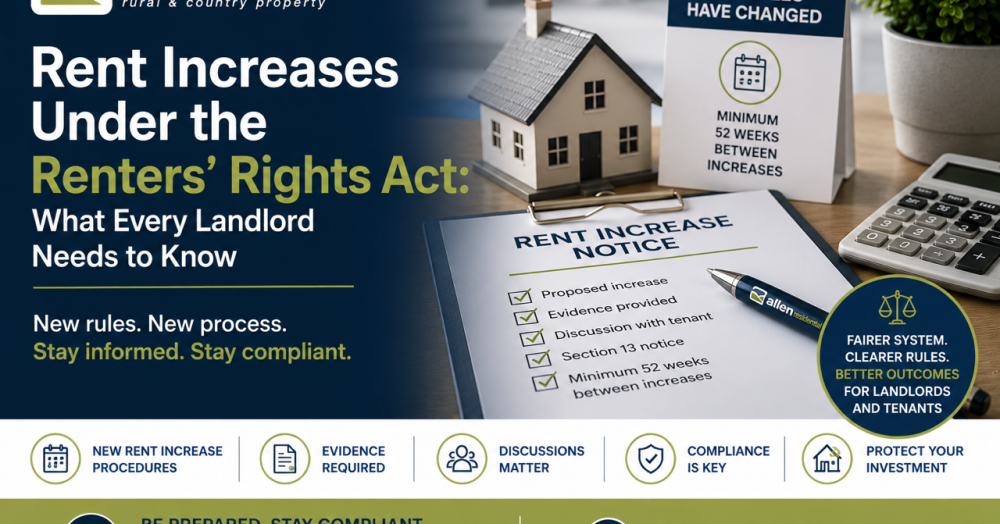
For many landlords, what was once a relatively straightforward administrative task has become a process that requires careful planning and, in some cases, formal tribunal proceedings.
Rent Increases Are Now Subject to a Statutory Process
Under the new legislation, assured tenancies are periodic from the outset, and landlords wishing to increase the rent must do so by serving a statutory Section 13 notice.
Rent review clauses that were commonly relied upon in fixed-term tenancy agreements no longer operate in the same way, meaning landlords must follow the statutory process when proposing an increase.
Importantly, a Section 13 rent increase cannot take effect during the first 52 weeks of a tenancy, and thereafter a landlord may not increase the rent using this procedure more than once in any 52-week period.
Evidence Is More Important Than Ever
Although the legislation does not require landlords to gather evidence before serving a Section 13 notice, it becomes extremely important if the proposed increase is challenged.
Should a tenant apply to the First-tier Tribunal (Property Chamber), the landlord should be able to demonstrate that the proposed rent reflects the property’s open market rent.
Useful supporting evidence may include:
- Comparable properties currently being marketed locally.
- Recently agreed lettings of similar properties.
- Improvements or refurbishment carried out to the property.
- Local rental market trends.
- Any additional facilities, services or improvements included within the tenancy.
Simply stating that “market rents have increased”, without supporting evidence of comparable local market rents, is unlikely to assist if the proposed increase is challenged.
Early Communication Can Prevent Disputes
Whilst landlords have a statutory route for increasing rent, good communication remains one of the most effective ways to avoid disagreements.
Discussing the proposed increase with your tenant before serving notice can often resolve concerns, provide an opportunity to explain the reasons behind the increase and help maintain a positive landlord and tenant relationship.
An experienced letting agent can assist by presenting market evidence objectively and helping both parties reach an agreement wherever possible.
Serving the Notice Correctly
The Section 13 notice must be completed accurately and served in accordance with the legal requirements.
Errors in the prescribed notice, incorrect dates or failures in the method of service may invalidate the notice, potentially delaying the rent increase and requiring the process to begin again.
As compliance requirements continue to increase, attention to detail has never been more important.
What Happens If the Tenant Challenges the Increase?
If a tenant believes the proposed rent exceeds the property’s open market rent, they may apply to the First-tier Tribunal (Property Chamber) before the proposed increase takes effect.
The Tribunal does not decide whether the increase is “reasonable”. Instead, it independently determines what it considers to be the property’s open market rent, having regard to the evidence presented by both parties.
Where an application is made, landlords may need to:
- Gather comparable market evidence.
- Prepare supporting documentation.
- Respond to Tribunal correspondence and directions.
- Provide written representations.
- Attend a Tribunal hearing where one is considered necessary.
Preparing a robust case can require considerable time and organisation, particularly where the local rental market is changing quickly.
The Administrative Burden Has Increased
For many landlords, a rent review now involves considerably more than selecting a new rental figure.
The process may include:
- Researching comparable market evidence.
- Assessing local rental values.
- Discussing the proposed increase with the tenant.
- Preparing and serving a valid Section 13 notice.
- Ensuring statutory compliance.
- Responding to any dispute raised by the tenant.
- Preparing evidence should the matter proceed to the First-tier Tribunal.
For landlords with multiple properties, this additional administration can quickly become both time-consuming and complex.
Why Professional Support Makes Sense
The Renters’ Rights Act does not prevent landlords from achieving an open market rent.
However, it does require rent increases to be properly evidenced, legally compliant and supported by the correct statutory process.
An experienced letting agent can help ensure that rent reviews are carried out professionally, notices are served correctly, market evidence is compiled where necessary and any disputes are managed efficiently.
This not only reduces the risk of costly errors and delays but also helps landlords maintain positive relationships with their tenants whilst protecting their investment.
Need Advice on Increasing Rent?
With rental legislation continuing to evolve, ensuring every rent increase is compliant has never been more important.
If you’re considering increasing the rent on your property, our experienced team can guide you through the process, prepare the required documentation and help ensure your proposed increase is supported by robust market evidence and complies with the latest legal requirements.
Please feel free to call us on (01761) 412 300 for the Paulton office; (01749) 672 678 for the Wells office or email lettings@allen-residential.co.uk
