The Renters Rights Act has begun
New Council Enforcement Powers
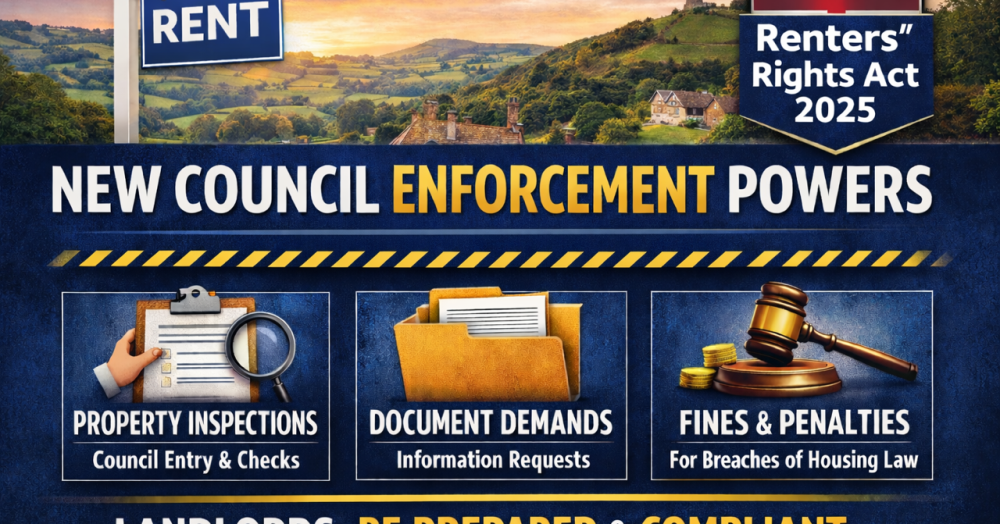
What Landlords Need to Know
As of the 27th December 2025, local councils in England have enhanced enforcement and investigatory powers under the Renters’ Rights Act 2025. These powers form the first phase of the Act’s implementation and come before the wider tenancy reforms due to take effect from 1st May 2026.
For landlords, this marks a significant shift in how compliance with existing housing law may be monitored and enforced — even where no formal complaint has yet been made.
This article explains what is changing, what councils can do, and how landlords should prepare, based solely on UK Government guidance.
Why Are These Powers Being Introduced?
The Government has made clear that the intention behind these changes is to:
- Improve standards in the private rented sector;
- Enable councils to act more quickly where non-compliance is suspected; and
- Target poor practice more effectively, rather than relying solely on tenant complaints.
Importantly, these new powers do not introduce new landlord obligations as of 27th December 2025. Instead, they strengthen councils’ ability to investigate and enforce existing legal duties.
What New Powers Do Councils Have?
Authorised local authority officers will have broader statutory powers to request information, inspect documents and investigate suspected breaches of housing law.
1. Formal Information Requests
Councils may issue written information notices requiring landlords (or managing agents) to provide specified documents or information. These may relate to:
- Tenancy agreements (current or historic);
- Gas, electrical and other safety certificates;
- EPCs;
- Deposit protection records;
- Rent and payment records; and
- Evidence of compliance with repairing and housing standards duties.
These requests can relate to properties let within the previous 12 months, even if the tenancy has ended.
Failure to comply with a lawful information notice — or providing false or misleading information — may itself constitute an offence.
2. Entry and Inspection Powers
Authorised officers may:
- Enter business premises (including letting agency offices) at a reasonable time to inspect or copy documents.
- Enter residential properties with appropriate notice to the occupier, or sooner where permitted by law or authorised by a warrant.
Entry powers are not unlimited. Officers must act proportionately, be formally authorised, and follow statutory guidance, but landlords should expect councils to be more proactive in investigations than in the past.
3. Evidence Gathering
Councils are permitted to:
- Take copies of documents;
- Seize relevant records where legally justified; and
- Take photographs or recordings as part of an investigation.
This evidence can be used to support enforcement action, including civil penalties or prosecution where appropriate.
What Penalties Can Apply?
Councils can pursue enforcement where breaches of housing law are identified.
Depending on the circumstances, this may include:
- Civil financial penalties;
- Formal compliance notices; or
- Prosecution for serious or repeated breaches.
Further enforcement tools — including expanded rent repayment orders — will be introduced in later phases of the Renters’ Rights Act from 1st May 2026, but councils’ ability to build cases has begun.
What This Means for Landlords
The key message for landlords is preparation, not panic.
✔ Ensure Your Compliance Records Are Complete
Landlords should ensure that all legally required documents are:
- Up to date;
- Accurate; and
- Readily accessible.
If you use a managing agent, confirm that records are held securely and can be produced promptly if requested.
✔ Take Council Correspondence Seriously
Any written request for information from a local authority should be treated as a formal legal notice. Deadlines should be met, and advice sought if the scope or legality of a request is unclear.
✔ Understand That Investigations May Be Proactive
Councils will no longer be limited to reactive enforcement following tenant complaints. Landlords with poor record-keeping or historic non-compliance may be identified through data-led or intelligence-based investigations.
Looking Ahead
The enhanced enforcement powers represent the starting point of the Renters’ Rights Act’s implementation, not the end.
With major tenancy reforms due from 1st May 2026, landlords who act now to ensure compliance, transparency and good record-keeping will be best placed to navigate the changes ahead with confidence.
If you would like support reviewing your compliance position or understanding how the upcoming reforms affect your portfolio, our team would be happy to help.
Please feel free to contact our team - Paulton Office (01761) 412 300 or Wells Office (01749) 672678
